
Most Dubai agents post a listing photo, wait for the likes, and wonder why the phone stays quiet. The agent who posts a single verified number from the Dubai Land Department, explains what it counts, and shows where it came from builds more trust in thirty seconds than a dozen polished listing carousels ever could. That is the core argument behind smarter real estate marketing, and it is the foundation this post is built on.
Here you will find a concrete five-day weekly plan any working agent can execute in about twenty minutes, no marketing team required. You will learn how to source a market figure honestly, how to pair a listing with its permit number, and how to film a short piece to camera that actually earns credibility. You will also learn the three quiet mistakes that erode trust faster than silence does: quoting a yield as a promise, repeating a portal figure with no source, and posting nothing but listings.
Whether you are exploring Twin AI tools or building your content system from scratch, this guide gives you the repeatable calendar that keeps you posting long after most agents have already quit.
The Agent Who Posts a Number Wins More Trust Than the Agent Who Posts a Photo
Scroll through most Dubai agents' feeds and you will find the same three things: listing photos, congratulations posts, and portal headlines copied with no source named. None of it signals that the agent knows the market any better than the next person in the directory.
Trust is built differently. A post that names a specific figure, identifies its source, and explains what that figure actually counts does more work than ten listing carousels, because it demonstrates genuine market knowledge rather than merely advertising inventory.
The data is unambiguous. According to NAR's 2025 Technology Survey, social media is the top lead-generating technology for real estate agents at 39% adoption, ahead of CRMs, MLS portals, and paid advertising. Research from North America also shows listings paired with video generate 403% more enquiries, and 73% of homeowners say they are more likely to list with an agent who uses video. The underlying logic transfers regardless of market.
A working agent with no marketing team and roughly twenty minutes a week can build a more trusted feed than a competitor posting daily, by following a repeatable five-day structure that prioritises sourced data, honest attribution, and one face-to-camera moment each week.
Why 90% of Agents Stop Posting by Week Three
Knowing the channel matters is not the problem. The problem is opening a blank caption box at 9 p.m. after a full day of viewings and asking, "What should I say today?" That question burns time and motivation in a single stroke, and it is why you know you should post. You don't.

The agents who stay consistent do not solve this with more creativity; they remove the decision entirely. Monday is always a market number. Tuesday is always an area explainer. The format is fixed before the week begins, so the only remaining question is which number, which area. That is a five-minute task, not a creative one.
Structure compounds further: a follower who sees the same format each week begins to expect it, then look for it, then share it. Consistency builds audience habit, not just reach.
Any framework requiring a marketing team or daily writing will be abandoned. The plan in this post is built around one person and one phone.
One agent with six months of zero Instagram activity committed to three short videos weekly, a Monday market update, and a Friday neighbourhood spotlight. Within 43 days, a silent follower closed an USD 850,000 transaction at zero ad spend. (Source: Jamil Academy, 30-Day Real Estate Social Media Content Calendar.) The follower never commented. They simply watched until they were ready.
The Five-Day Weekly Plan
Here is the calendar. Five fixed formats, decided once, repeated every week:
Monday: one market number with a named source
Tuesday: one area explainer
Wednesday: one buyer or seller question answered
Thursday: one listing with the permit number visible
Friday: one short piece to camera
The structure is format-first, not topic-first. You decide Monday is always a data post, full stop. Next Monday, it is a data post again. You are not choosing what kind of thing to post; you are only choosing which number, which area, which question. That single shift eliminates most of the friction that kills consistency.
Each slot serves a different reader. The data post speaks to investors watching yields. The area explainer speaks to relocating buyers evaluating neighbourhoods. The Q&A speaks to first-timers who are nervous and do not yet know what to ask. The listing speaks to active searchers ready to view. The video speaks to everyone who has not decided anything yet but whose attention you need to stay in.
Five posts, roughly twenty minutes combined, once the initial setup is done. The same five pieces cross-post to Instagram, LinkedIn, and Facebook with minor caption edits; one strategy, three platforms.
Day One: One Market Number with a Named Source
Monday's post starts here. One number, one source, two sentences of honest framing.
The source is Dubai Land Department open data. DLD records every legally registered sales transaction and every registered rental contract in Dubai. These are the only figures that reflect what actually changed hands under law, not what was listed, not what a portal estimated, not what a developer pre-sold before registration.
What to post: a single, specific data point. A transaction count for a named area in a named month. A registered contract volume. A price-per-square-metre movement on completed sales. Not "the market is strong." Something checkable.
The transparency rule: state what the figure covers in one sentence, then state what it excludes in one sentence. If you are quoting secondary market sales registrations for a given month, say so, then note that off-plan reservations not yet completed are excluded. That thirty-second addition separates your post from every competitor who copied a portal headline.
How to pull it: bookmark DLD's real estate transactions page, check the most recent data, record the figure, its transaction type, and its reference period. Write your two framing sentences immediately.
Time required: five minutes, once the bookmark is in place.
Day Two: One Area Explainer
Day One gave you a single sourced number. Day Two gives your audience something equally valuable: the honest answer to "but what is it actually like there?"
This is not a developer brochure. It is a short post, or a four-slide carousel, written from a practitioner's perspective. It names who the area suits and, just as importantly, who it does not.
The structure takes one decision out of every week:
Name the area
Name one thing most outsiders get wrong about it
Give one practical fact: travel time to a named hub, a typical service charge range per RERA indexes, or the ownership structure (freehold or leasehold)
State plainly who it is best suited for
Rotate through your active patch, one area per week. After twelve weeks you have a searchable archive that positions you as a genuine local specialist, not a generalist who sells anywhere on the map.
On sourcing: DLD registered transaction data by area, RERA service charge indexes, and your own transaction history are all legitimate inputs. Keep them clearly labelled. "In my experience" and "according to DLD data" are different claims; never present one as the other.
Estimated time: five to seven minutes. The post is simply giving structure to knowledge you already hold.
Day Three: One Buyer or Seller Question Answered
Where Day Two drew on what you already know about a place, Day Three draws on what you heard that week. Every question a buyer or seller asked you is a post waiting to be written. Open with "a client asked me this week..." and you have one of the most reliably engaging lines on any Dubai real estate feed, because it signals a real conversation rather than a rehearsed pitch.
The format takes four steps:
State the question plainly, exactly as it was asked
Answer it directly in two to four sentences
Add one nuance the questioner would not have thought to raise
Invite follow-up questions in the comments or DMs
That fourth step converts a broadcast into a conversation and is why this post type generates more DM inquiries than almost anything else on an agent's feed.
Rich question territory in Dubai includes: DLD transfer fees and who typically pays them, the difference between a Sales and Purchase Agreement and a title deed, off-plan payment milestone structures, what a RERA broker card confirms and how to verify one, and when to get mortgage pre-approval before booking viewings. Giving a clear answer signals competence without gatekeeping.
The Q&A post builds trust the data post cannot reach. It shows you are accessible, honest about complexity, and willing to share knowledge freely. The answer is already in your head. The only work is writing it plainly.
Estimated time: three to four minutes.
Day Four: One Listing with the Permit Number Visible
Day Four gives followers something to act on: one listing, not five.
Pick the strongest property on your books this week. What separates this post from every generic listing photo is one thing: the RERA permit number, made prominent.
Every advertised property in Dubai must carry a permit issued through the Trakheesi system. Most agents bury it in small print or drop it from social content entirely. Put it front and centre: "This listing is registered with RERA, permit number X. You can verify it at the Dubai Land Department's official portal." That single sentence does more credibility work than a polished graphic.
Lead with the benefit, not the spec. "Ideal for a relocating family who wants a short school run and a fixed-price community" lands harder than "3BR / 2,100 sqft / AED X,XXX,XXX" as the first line. Give the spec second.
If you record a thirty-second phone walkthrough, put the permit number as a visible overlay on the video itself, not only in the caption. Many viewers never read captions.
Time: five to six minutes for the caption and static image; add three to four minutes for a short walkthrough.
Day Five: One Short Piece to Camera
The listing post is done. Now for the one post this week that no caption, carousel, or data graphic can replicate: your face.
Keep it thirty to sixty seconds. A focused sixty-second piece will outperform a loose three-minute one every time. Viewers decide in the first few seconds whether to keep watching; a tight structure earns that decision.
The topic matters less than you think. Recap Monday's market number. Answer the buyer question from Wednesday directly to camera. Share one thing you noticed at a viewing this week. Any of those works. A face builds a quality of trust that text and data simply cannot. Followers who have read your posts all week and then see you speak start to feel they know you.
Preparation takes three lines, not a script. One sentence of context, one main point, one closing line. Write it on a sticky note. Look at the camera and say it. Agents who over-script this sound like they are reading, which is worse than being informal.
The setup is whatever you have: phone propped on a stable surface, natural light in front of you, a clean background behind you. Your knowledge is the production value.
Estimated time: two minutes to think, one or two takes, thirty seconds to trim and post. It is the most time-efficient trust-building post you will make all week.
How to Source a Market Number Without Getting It Wrong
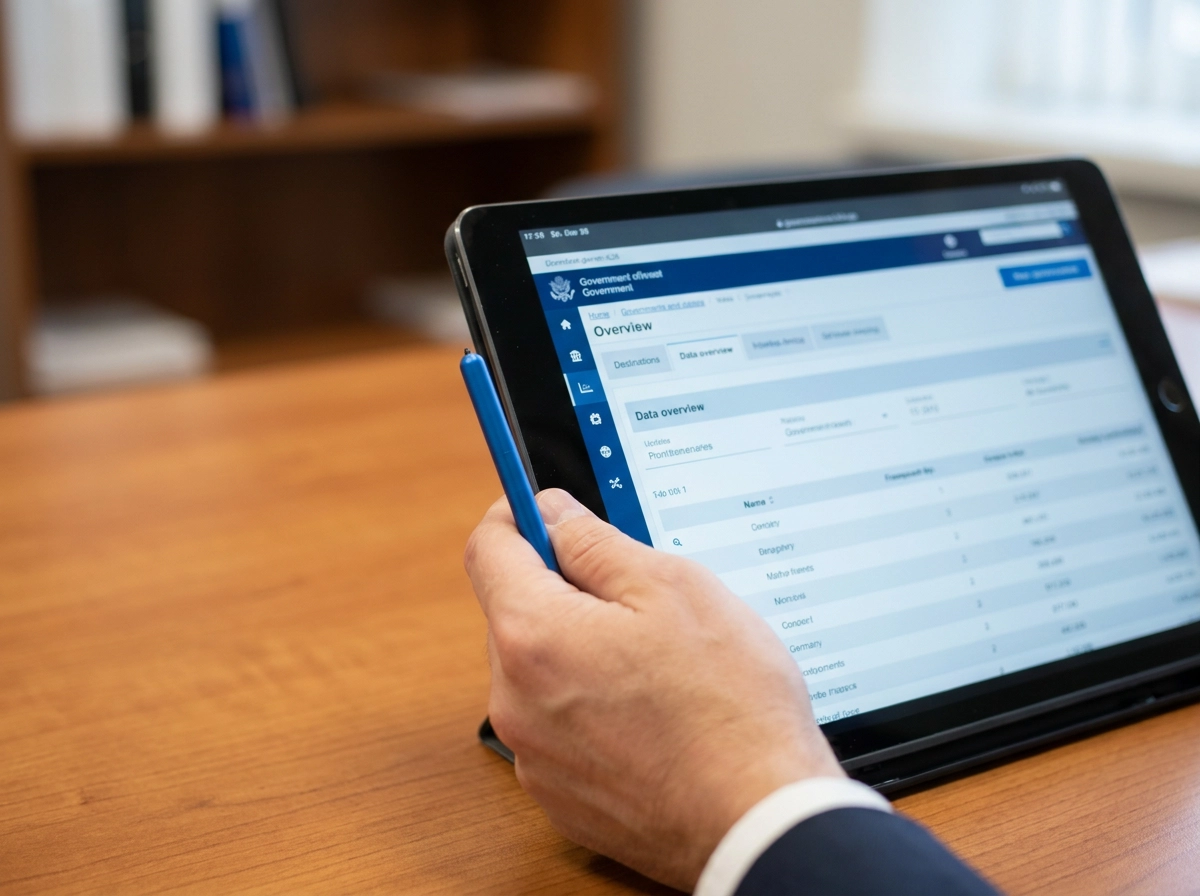
The face-to-camera post earns trust through presence. The market number post earns trust through proof. Here is how to make sure that proof holds up.
Step 1: Go to DLD, not a portal. DLD publishes registered transaction data through its official channels, recording what legally completed. A portal's number reflects what was listed, advertised, or estimated by an algorithm; it is not the same thing.
Step 2: Write down exactly what the figure counts. "X registered secondary market sales transactions in [area] in [month/quarter], per DLD" is a complete, honest claim. "Dubai property prices rose X%" with no source, no period, and no defined area or asset class is not.
Step 3: Write down what the figure excludes. DLD registered sales do not include off-plan reservations not yet reaching registration, transactions from adjacent periods, or rental market activity. Rental data means registered Ejari contracts, which is a separate dataset.
Step 4: Name the sample size. If DLD states the figure rests on a specific number of registrations, include that count. "Based on X registered transactions" strengthens the claim; a smaller number reflects genuine market conditions, not a weakness in your research.
Step 5: Never convert a historical average into a forward promise. "The average gross yield recorded on registered transactions in this area over the past twelve months was X%" is honest. "You can expect X% yield" is a promise; it is neither accurate nor legally sound.
Three Mistakes That Quietly Erode Your Credibility
Even with clean sourcing habits, three patterns will undo the credibility you are building.
Quoting a yield as a promise. A yield figure from DLD-registered transactions is a historical average of what specific past deals achieved under specific conditions. Writing "this property will return X%" converts a descriptive statistic into a forward guarantee, which misleads buyers and can breach RERA guidance on financial promotions. Always label yield figures with their source, the period they cover, and a statement that past performance is not a forecast.
Repeating a portal figure with no source. Portals aggregate asking prices, not completed transactions. "Average prices in [area] are AED X" drawn from a portal reflects what sellers want, not what buyers paid. A knowledgeable buyer spots this immediately, and the credibility damage is greater than posting nothing.
Posting only listings. A feed of listing photos signals salesperson, not specialist. It gives no reason to follow, no reason to trust, and nothing for the buyer who is six months from deciding to return for. One listing per week, as the five-day plan sets out, is the right ratio.
Putting the Week Together in Twenty Minutes
The setup cost is front-loaded. The first time, bookmark the DLD open data source, list the areas you will rotate through, and write down ten recurring questions from past clients. That takes thirty to forty minutes once. Every subsequent week costs twenty minutes or less.
A fixed trigger matters more than willpower. Check DLD data on the same day each week, pull the number, and write the post immediately. The post written at the point of research almost always gets published. The post marked "draft, finish later" often does not.
Batching is optional but efficient. Some agents write all five captions in one fifteen-minute sitting on a Sunday evening, record the piece-to-camera on Monday morning, then schedule the rest. The feed looks like daily posting; the work was two short sessions.
Over twelve weeks this compounds into sixty pieces of content: twelve sourced market posts, twelve area explainers, twelve Q&A posts, twelve permit-visible listings, twelve face-to-camera videos. No invented figures, no unsourced claims, a clear position as the knowledgeable local specialist.
For agents who want this structure without the manual scheduling and caption writing, Brandios is built precisely for this use case. Its real estate pack includes DLD data feeds, permit and QR code overlays on listing videos, and an AI twin that delivers your market posts in your voice, so the five-day plan runs on autopilot while you stay on viewings.
What You Have After One Consistent Month
Four weeks in, you hold twenty posts: four sourced market numbers, four area explainers, four answered questions, four permit-visible listings, and four pieces to camera. No competitor posting only listing photos can produce that as evidence of expertise.
Most inquiries from social content come from people who never liked or commented. They watched for weeks, then acted. Consistency keeps you in that consideration set; one quiet month off the feed removes you from it.
One habit protects everything: never post a number without naming its source and stating what it counts. That single discipline is the line between a trusted market voice and background noise.
Start today. Find the most recent DLD registered transaction data for one area you actively work. Write two sentences on what the figure covers and one on what it leaves out. Post it. That one post puts you ahead of most agents on the feed right now.
Conclusion
Consistent, credible posting is not complicated; it is simply rare. Five focused posts each week, each built on sourced data, clear explanations, and a visible face, compound into an undeniable body of expertise that listing photos alone can never match.
The agents who win trust online share three habits: they cite their sources, they show up every week without exception, and they prioritize education over promotion. Those three disciplines separate a trusted local specialist from background noise.
You do not need a large budget or a production crew. You need a plan, twenty minutes a day, and the discipline to never post a number without naming where it came from.
Start with one sourced DLD figure today. Post it, own it, and repeat the process next week. Thirty days from now, your feed will speak for itself.